Drywall and plaster repair, Morris County
Drywall Repair in Pompton Plains, NJ
Flood-soaked basement walls, ice-dam stains, cracks, popped nails and holes, repaired, textured to match the surrounding surface and left so your next coat of paint hides the spot.
Call 7 days, 7am–9pm
Ring us; the area drywall pro who picks up your job phones you, talks the wall over and works out the cost with you.
This short form reaches an area drywall pro, who calls with a question or two and a price.
Basement and flood damage
Wet board cut out above the waterline and replaced once the wall has dried.
Flood-damaged wallsWinter melt stains and sags
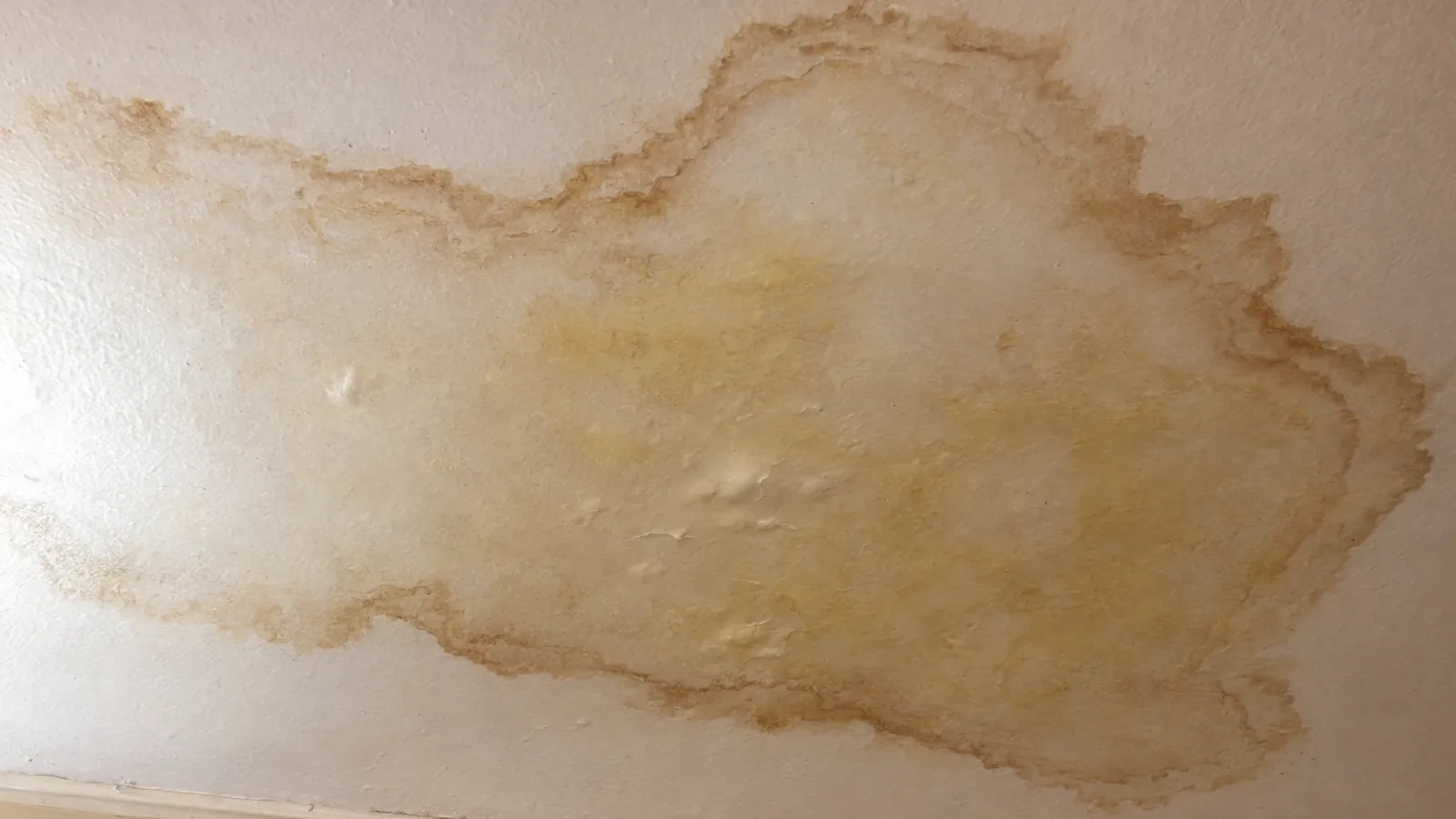
Stain sealed, soft board swapped and the ceiling texture blended around it.
Ice-dam ceilingsCracks, seams and popped fasteners
Seams re-taped and fasteners reset, which gives the line a much smaller chance of returning.
Cracks and nail pops
Under the paint: board, compound and texture
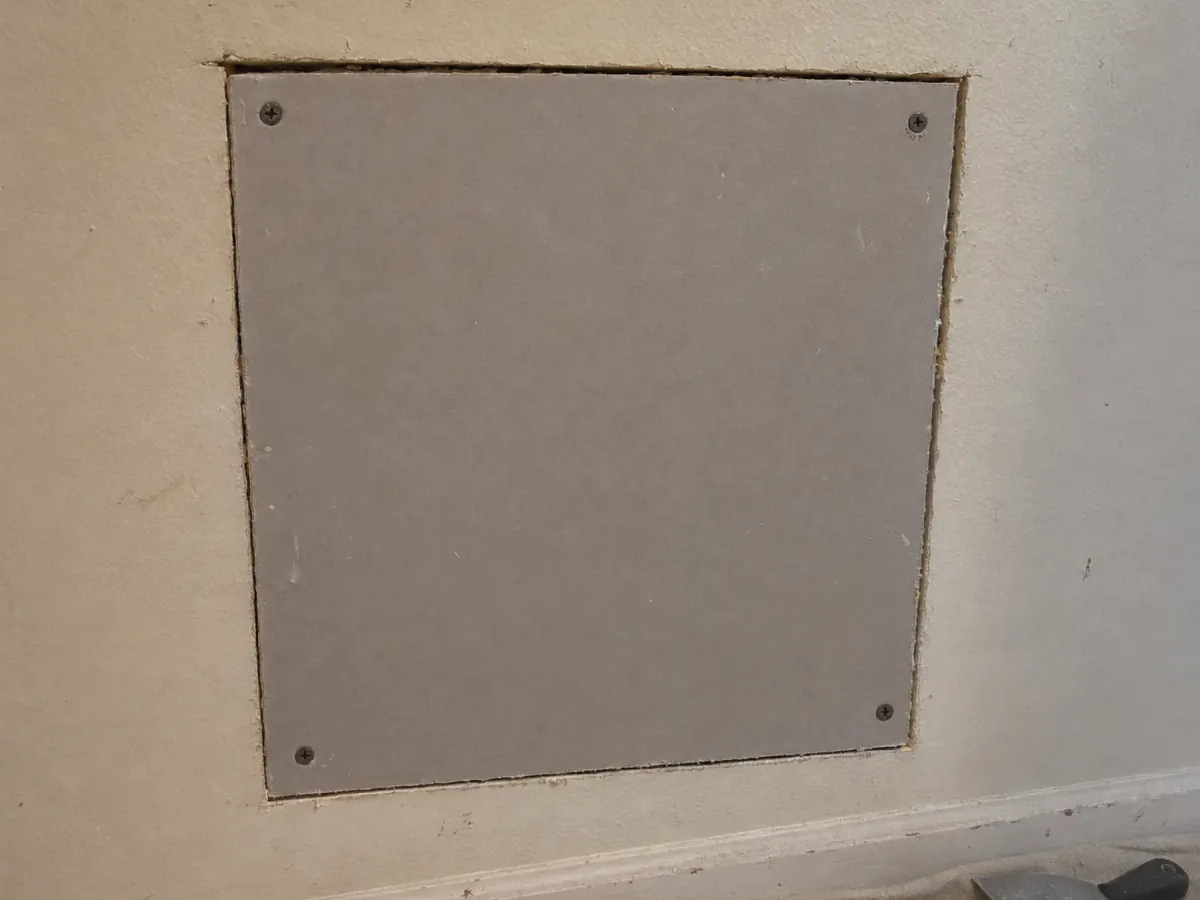
The standard wall here, as almost everywhere, is drywall: gypsum pressed between paper facings and fastened to wood studs. Half-inch board on the walls is the norm. Newer ceilings often use a lightweight half-inch board built to resist sagging, or go up to five-eighths. Older houses can hide plaster over wood lath, or plaster over a gypsum lath base, and that changes the repair. A square of modern drywall dropped into a plaster wall sits low unless it gets shimmed out flush with the thicker surface around it.
The compound matters as much as the board. Setting-type powder, the kind mixed with water and sold by working time, hardens by a chemical set and shrinks very little. It is the right first fill for deep holes and for bedding tape. Premixed all-purpose mud is softer and sands easier, so it belongs on the final coats. Using one bucket of premix for everything is a shortcut, and months later it tends to reveal itself as a sunken patch.
Then comes texture, which is where most patches give themselves away. Smooth walls are the hardest place to hide a repair, because nothing breaks up the light raking across them. Ceilings are a different job. Each finish has its own trick:
- Smooth: wide feathering and a thin skim over the whole area, not just the patch.
- Orange peel: sprayed in light passes, tested on scrap board first to match the bump size.
- Knockdown: thrown on in splatters and troweled down once it stiffens a little.
- Swirl or stipple: worked by brush, copying the pattern and the spacing of the old strokes.
- Popcorn: pre-1980s popcorn gets a lab asbestos check first, and nobody should scrape or saw into it until the result is back.
Below grade and behind the garage door in Pompton Plains
The Pompton River forms the eastern border of Pompton Plains, and the same water line is the edge of the township and of Morris County. The low, flat ground near it is prone to flooding from the river. So after high water, look at the basement walls before anything else, and resist the urge to close them up in a hurry.
Drywall acts like a wick. Water that sits against the bottom of a wall climbs into the gypsum well above the puddle line, so a proper repair cuts a straight line a good distance above the highest wet spot, not at it. Wet insulation comes out with the board. Below grade, the new sheets should be a moisture- and mold-resistant type and should stop short of the slab, leaving a small gap so the next bit of seepage does not wick straight back up.
Fire separation at the garage wall
An attached garage is not just another room. Under the residential code, the wall and ceiling dividing an attached garage from the house act as a fire barrier, and a garage ceiling with a bedroom or den overhead needs Type X board at 5/8 inch. A patch there has to be the same kind of board, with the joints taped and no open holes left from old shelving or wiring. Garage walls take the knocks, too: car doors, bike handlebars and the corner of a recycling bin.
When the honest answer is to wait
If the studs or the bottom plate still read wet on a moisture meter, or the room smells musty, the repair waits. New board screwed over damp framing is a redo waiting to happen. Fans, a dehumidifier and open wall cavities do more good in that first stretch than any amount of mud.
The repairs, one by one
Four kinds of work cover nearly everything a drywall repair job in a house like yours turns into. There's a separate page for each: causes, the repair itself, and what you should ask up front.
Flood-soaked walls
Board that soaked up river water or a burst line, cut back above the wick mark and rebuilt once the framing reads dry.
Winter-melt ceiling stains
Rust-colored rings and spongy spots along exterior walls after a snowy spell, sealed or swapped out and textured to match.
Seam cracks and popped fasteners
Diagonal cracks off door corners, split seams and rows of popped nails, re-taped and refastened instead of just skimmed over.
Holes, dings and remodel openings
Doorknob holes, anchor holes and the openings plumbers and electricians leave behind, patched flat and blended so paint covers them evenly.
Landlords with a unit to turn over
Not every home here is owner-occupied. Census estimates put 883 of the 4,691 occupied homes in Pompton Plains in renters' hands, and a big block of the newer housing sits in buildings of 50 or more units. Move-out damage has a pattern: anchor holes from TV mounts, a doorknob punched through, scuffed outside corners, tape pulls on fresh paint. The rental turnover guide covers what to patch, what to just paint over, and how to slot the work between one tenant's keys and the next tenant's lease.
Read the guide to wall repairs between tenants, or browse the rest of the wall care notes.
Photo in, paint-ready wall out
From first message to dry primer, the job runs like this, and the price is fixed before any cutting.
- You call or snap a photo. Say what broke and in which room. Frame the damage next to a light switch or doorframe; that one picture beats a long description.
- The pro handling it phones you with questions, then a price. You okay that number before any saw touches the wall. If the wall needs to dry first, you hear that up front.
- We book a date that fits. Drying time, tenants moving out and a painter already on the calendar all get worked around.
- The repair gets done properly. Damaged board out to solid edges, new board fastened to framing or backing, seams taped, three thin coats, sanded flat and textured to match.
- Primer goes on, and you get a wall that only wants your color. Ask the pro about painting too, if you want the whole wall finished in one go.
Rough money, and the things that swing it
This Old House's price guide for drywall repair (revised June 2026) lists about $60 to $200 for a small hole, $60 to $330 for a crack, $320 to $1,300 for a hole through a ceiling, and bigger wall work at $50–$80 times its square footage. Treat them as a nationwide yardstick; nobody in Pompton Plains is bound by them. What actually moves the number on a given job: how much board has to be removed, whether a ceiling texture needs matching, ladder work over stairwells, and how much drying and how many coats the repair needs.
When the Pompton River comes over its banks
After Hurricane Irene in late August 2011, the Pompton River crested at a record level, and the USGS measured 6.5 to 8.6 inches of rain in the Passaic and Hackensack river basins during the storm. A burst supply line upstairs puts less water on the floor, but the order of the work is the same:
- Stop the source. Shut the main for a plumbing leak. For river water, wait until it is down and the power to the affected circuits has been checked by an electrician.
- Ceiling bulging with water? Your opening move: the breaker for the light or fan closest to the bulge goes off. Only then keep the whole household clear of the space below it.
- Get it drying. Pry off baseboards, get fans blowing, set a dehumidifier going, and open soaked wall bays so the studs get air.
- Check moisture before deciding anything. A meter reading at several heights tells you how far the wet climbed, which a glance at the paint will not.
- Then decide what comes out. Soft, swollen or peeling board goes, along with any wet insulation. Panels that never softened and are dry again may get by with a sealer coat and paint.
Where the dust goes, and where it should not
Sanding dust is so fine that the furnace blower will carry it to every bedroom if it gets the chance. A proper job treats that as part of the repair, not an afterthought. Before you agree to a date, ask the pro how they handle these:
- Floors: canvas or rosin paper taped down, plus a path from the door.
- Furniture: moved out of reach or wrapped in plastic.
- Vents and returns: covered, with the furnace fan off while sanding.
- Doorways: a plastic wall with a zippered opening on larger jobs.
- Sanding: a dust-extracting sander tethered to a shop vac, or a wet sponge for little spots.
- Older paint: lead-safe methods where the house predates 1978.
A clear record for an insurer or landlord
Who pays, and what's covered, is for your insurance carrier or landlord to sort out with you; we stay clear of it. Either way, it pays to document the damage before a single piece is cut or binned:
- A wide picture of each room first, then tight shots of each stain, bulge and spongy patch.
- The waterline on the walls, with a tape measure standing in the frame.
- The date you found it and what you think the source is.
- Model and serial plates on a failed water heater or washer.
- A list of damaged furniture and stored boxes, with photos.
- Before tossing cut-out board or carpet, a question to the insurer about keeping a sample.
- For renters: photos sent to the landlord in writing, not just a phone call.
Pompton Plains housing by the Census numbers
Pompton Plains holds 4,977 homes according to Census survey figures covering 2020–2024, and the 1950s account for more of them than any other decade. Add the 1940s and the houses from before 1940, and roughly two of every five homes standing today predate 1960. That age shows on the walls.
The 405 houses from before 1940 are the ones most likely to have plaster on wood lath. Plaster cracks run long and branch, and a loose section has to be reattached to the lath with plaster washers before anything gets skimmed over it. Postwar houses may turn out to have early drywall, or gypsum lath under a plaster coat; a patch in either needs shimming so the new surface lines up.
Age brings paint concerns, too. Over half the houses in town predate 1980; the EPA's lead-paint rules cover any home from before 1978. Sanding old paint makes dust that should not end up on the floor or in the ducts, so for a pre-1978 house, confirm the work will follow the EPA's lead-safe methods. That is not a reason to avoid the repair. It is a reason to do it the right way.
Up Route 23 and across the river to Wayne
Route 23 runs along the east side of town, and Interstate 287 cuts across the northwest corner. Work is booked across Pompton Plains and in these neighbors:
- Pequannock. south of town, same township
- Lincoln Park. southwest, toward the county line
- Riverdale. straight north
- Kinnelon. west, into the hills
- Wayne. east, across the Pompton River
- Bloomingdale. north-northwest, past Riverdale
A stain, a crack or a hole: start with a picture
A stain that keeps growing, a crack you have filled twice, a hole from a doorknob or a whole basement wall after high water: describe it or send a picture, and you will hear what fixing it takes before any board is touched.
One call buys you a straight read on the wall, then a figure from an area drywall pro.